RENEWED:
The Journey to Safe Drinking Water
How Wastewater Becomes Drinking Water: Direct Potable Reuse Explained
California now has some of the world’s strongest rules for direct potable reuse. Watch how advanced purification makes safe, great tasting drinking water.
Renewed: The Journey to Safe Drinking Water
Quick Facts About Recycled Water
All the water that has ever existed on Earth is still here. Nature knows that water is too precious to use just once.
Every drop of water has been on an incredible journey…used, recycled and reused millions of times for billions of years. This is how nature works, using, reclaiming, and purifying water in an endless, sustainable cycle.
For thousands of years, humans have followed nature’s lead, developing ways to speed up and improve the purification process.
From ancient sand filters to today’s advanced purification technology, we’ve continued refining how we clean and reuse water safely.
Recycled drinking water must meet the same drinking water standards as tap water.
Of the 500+ water recycling facilities in the U.S., 285 are in California.
In 1918, California developed the nation's first regulations for using recycled water in agriculture.
Renewed: The Journey to Safe Drinking Water Video
The Southern California Water Coalition and its sponsors present Renewed: The Journey to Safe Drinking Water, a four-minute animated video by Epipheo Studio. The film illustrates how advanced purification technology accelerates the Earth’s natural water cycle, transforming wastewater into a pure, safe, and reliable drinking water source.
Read the Video Transcript
Water. We all know how essential it is when it’s in our hands.
When we’re putting it to use in our daily lives.
But where does it come from? And where does it go after we use it?
Technically speaking, water doesn’t really come from or go anywhere.
All the water that has ever existed on Earth is still here.
Nature knows that water is too precious to use just once.
Every drop of water has been on an incredible journey…
used, recycled, and reused millions of times for billions of years.
Even the clearest, most pristine drop of water was once something else entirely…
It’s hard to believe, but this is exactly how nature works…
using, reclaiming, and purifying water in an endless, sustainable cycle.
Essentially that means…all water, yes all water, is recycled.
For thousands of years, humans have followed nature’s lead, developing ways to speed up and improve the purification process.
From ancient sand filters to today’s advanced purification technology, we’ve continued refining how we clean and reuse water safely.
Here’s the reality: we’re not getting any more water.
Yet, the demand for clean, reliable water keeps growing.
Our changing climate is creating more water-stressed regions where bringing water from hundreds of miles away is a less reliable option, and a natural disaster could cripple water delivery systems.
and a natural disaster could cripple water delivery systems
This means, communities across the world need sustainable ways to secure safe water.
Water suitable for many different purposes such as drinking, bathing, and growing food.
Because every drop of water has value, even wastewater, which is technically just water we’ve already used, can be cleaned and purified to remove everything from microscopic particles to chemical traces; protecting our health, dignity, and safety.
By following nature’s example and using advanced purification technology, we can now clean water so thoroughly that it can safely return to our taps, ready to drink once again.
This process uses multiple, proven stages of purification, such as:
Microfiltration, which removes suspended solids and bacteria;
Reverse osmosis, which filters out dissolved salts and trace contaminants; and
Ultraviolet light and advanced oxidation, which destroy any remaining contaminants.
There are two main ways communities use these technologies:
Direct potable reuse or DPR systems offer a fully contained, continuously monitored system that purifies and returns water directly to our drinking supply.
Indirect Potable Reuse or IPR purifies the water before sending it to natural systems like groundwater basins or reservoirs, blending with other sources before being used and treated again.
Either way, the result is water as pure as, or even purer than, what nature provides.
It’s a complete cycle: water used, reclaimed, cleaned, purified, and renewed—ready to sustain life all over again.
This is not the future of water—it’s happening now.
In many parts of the country and the world, we already drink purified, recycled water every day—safely, confidently, and sustainably.
Every drop matters. Because you and the environment matter.
A future where everyone has access to pure, reliable water is a future where we can all thrive,
and where every precious drop continues to give life, again and again.
How Water Recycling Works
By following nature’s own example and using advanced purification technology, we can clean water to exceptional levels of purity, making it safe to drink once again. This process uses multiple, proven stages of purification to ensure quality and safety. Key technologies include:
- Microfiltration: Removes suspended solids and bacteria.
- Reverse Osmosis: A powerful filter that removes even the smallest particles, like salts and trace contaminants.
- Ultraviolet Light & Advanced Oxidation: A final, high-tech step that uses powerful light to ensure any remaining contaminants are neutralized.
Two Proven Paths to Pure Water
Communities use these technologies in two primary ways:
- Indirect Potable Reuse (IPR): Purified water is first sent to a natural buffer, like a groundwater basin or reservoir. It blends with other water sources before being treated again at a standard drinking water plant.
- Direct Potable Reuse (DPR): This is a fully contained, continuously monitored system that purifies the water and sends it directly to a drinking water plant or distribution system for a final polish before it reaches your tap.
No matter the path, the result is the same: water that is as pure as, or even purer than, what nature provides. It’s a complete cycle: water is used, reclaimed, purified, and renewed. This isn’t the future of water—it’s happening now.
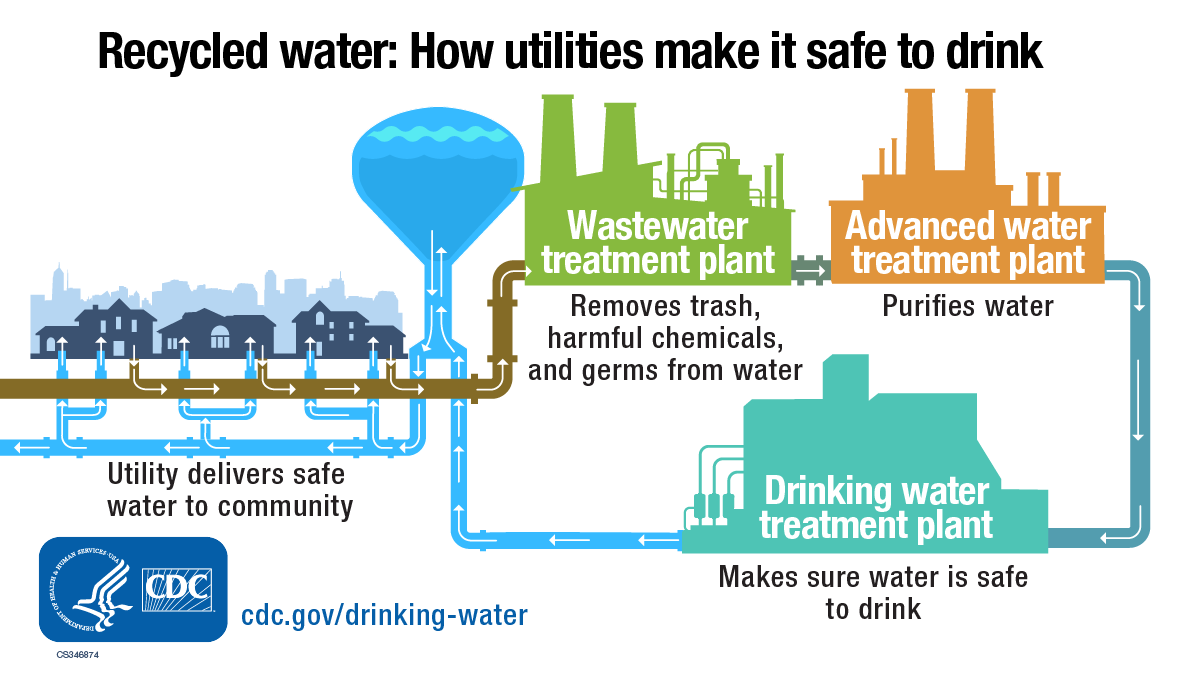
Multiple barriers remove viruses, pharmaceuticals , microplastics and more.
Safety and Oversight by Design and by Law
Recycled water that meets modern standards is considered very safe for its intended uses, including drinking in systems designed for that purpose. Here are some quick facts:
- Recycled drinking water must meet the same drinking water regulations as any other tap water source, including strict limits on germs and chemicals.
- Public health agencies such as the Center for Disease Control (CDC) and the federal and state Environmental Protection Agencies report that adequately treated recycled water is just as safe to drink as water from rivers or reservoirs after conventional treatment.
- In California, recycled water quality and allowed uses are tightly regulated under Title 22 of the California Code of Regulations, with detailed treatment and monitoring requirements. Learn more at the state’s website HERE.
Myth: "Toilet-to-tap" is unsafe
Fact: The stigma that recycled water is dirty is a major myth. This water is treated through advanced purification processes, including reverse osmosis and oxidation, to create water that is pure.
Myth: You can taste the difference
Fact: Purified water meets or exceeds standards, as the treatment process removes pharmaceuticals, pathogens, and chemicals. Taste is managed by mineral balancing.
Myth: The technology is too new
Fact: The technology accelerates natural cycles and has been used for this purpose for decades. In fact, the Orange County Water District has successfully used recycled water for groundwater replenishment for decades, proving the effectiveness and safety of the technology.
Community Voices
See what trusted creators are saying after sharing our video—short testimonials and curated posts that make the science real. Explore three perspectives: recycled water in space travel, how it benefits marine life along our coast, and a step-by-step look at how the technology works.
Imagine if to have enough water to drink you needed to capture every ounce of your sweat, and drop of moisture in your breath. In space, that’s what astronauts have to do. Here on Earth, water recycling is just as important, but be thankful you don’t have to ring out your sweaty workout clothes directly into home water recycler. Instead we have city wide recycling systems to thank for getting clean water back in our homes.
Water recycling helps reduce the amount of water discharged into our oceans, and reduces the amount we take from our already diminishing watersheds. These programs are essential to protecting this resource and the environment, so make sure to follow along with the Southern California Water Coalition to learn more.
Reverse osmosis is one of many steps I use to make sure this water is good enough for science….And the same is true for DPR and IPR – reverse osmosis is one of multiple stages of purification in the water recycling process. Microfiltration, for example, will remove solid particles and bacteria, and UV radiation and advanced oxidation will eliminate any leftover contaminants after microfiltration and RO.
Built for Southern California
DPR complements projects like Orange County’s decades-long purified water program and new regional investments (Pure Water Southern California, Los Angeles, San Diego, Ventura).
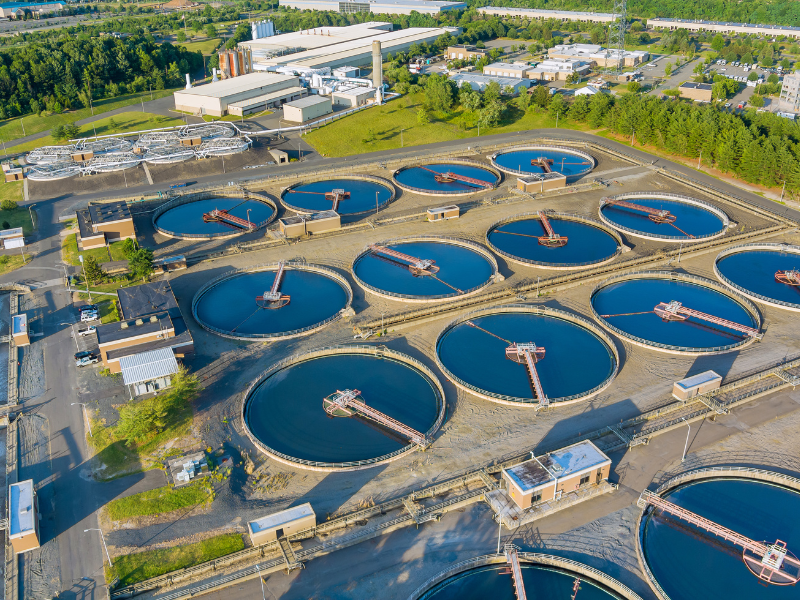
- More local supply
- Resilient in drought
- Protects rivers and ecosystems
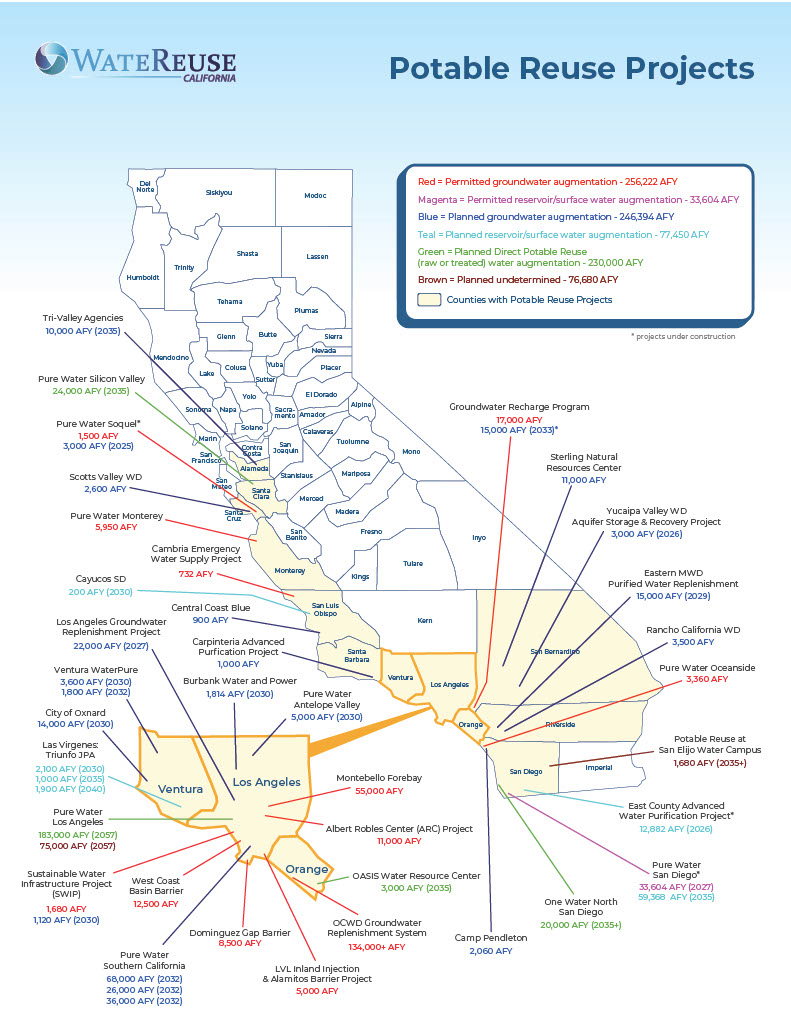
Thank You to Our Partners